Pressure & expectations
Why Deep Tissue Should Not Leave You Bruised (and How Pressure Is Really Dosed)
Sore after deep tissue? Sure — that means we found it. Bruised? Never. Here is how pressure actually gets dosed at this table, and why “no pain, no gain” is a myth we would love to retire.
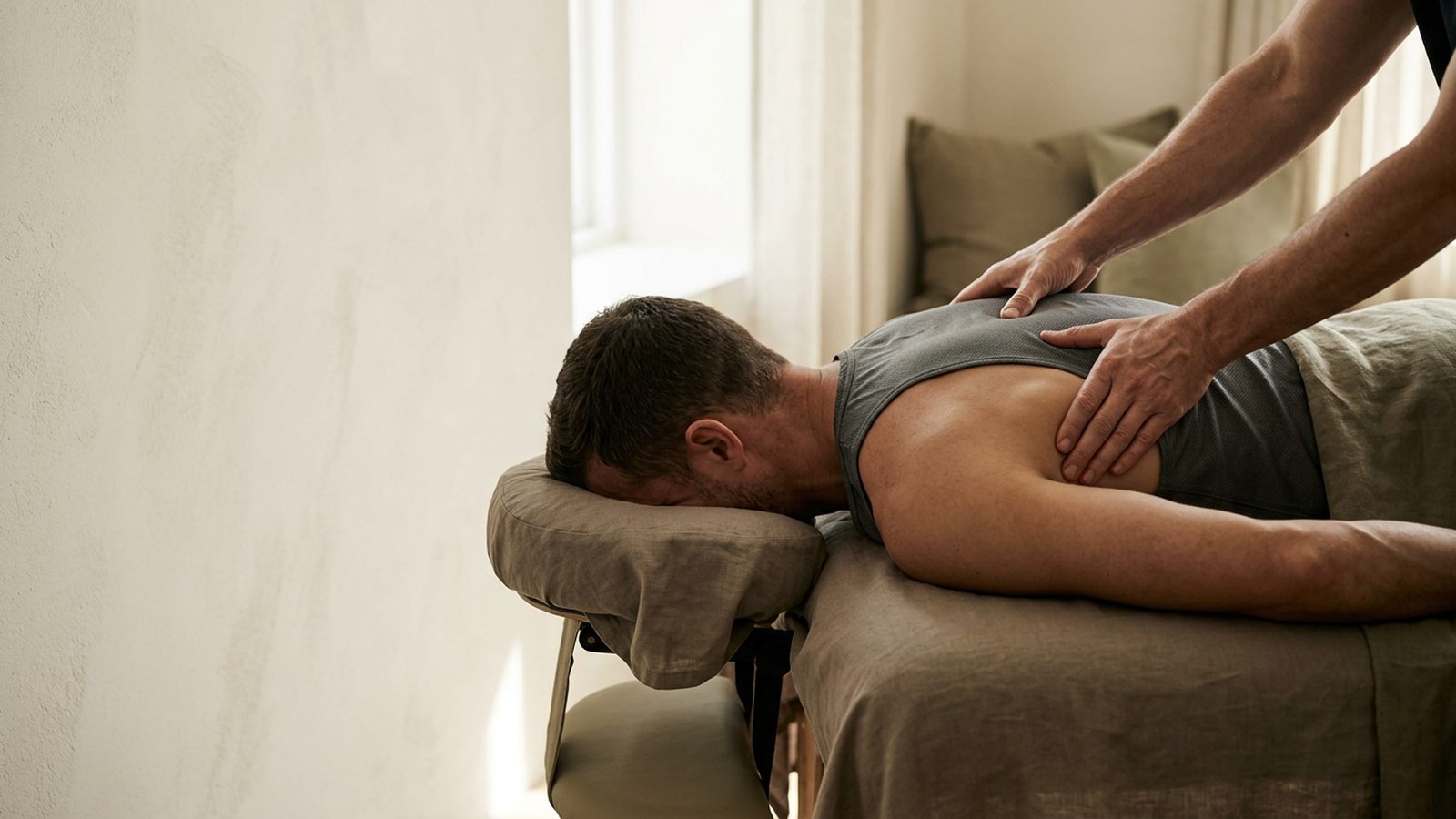
If you've ever skipped deep tissue because a friend said they "couldn't walk for two days," this one's for you.
Here's the honest truth from behind the table: deep tissue massage should leave you sore — like a good workout sore — but it should never leave you bruised. If it does, something was off. Let's talk about what real pressure looks like, why "no pain, no gain" is a myth we'd love to retire, and how you stay in the driver's seat of every session.
Sore vs. bruised: two very different things
Some next-day soreness after deep tissue is normal — the same mild, satisfying ache you feel after a hard training session. It usually fades in 24–48 hours.
A bruise is different. A bruise means blood vessels under the skin were damaged. That's not "working out a knot" — that's too much force, applied too fast, to tissue that wasn't prepared for it. Bruising is never a requirement for results, and at a properly run practice it's not the norm.
Quick heads-up: certain medications (like blood thinners) and some health conditions make bruising more likely regardless of pressure. That's part of your health history conversation before any deep work — another reason we screen first.
The myth: "it only works if it hurts"
There's a stubborn idea that a massage only "counts" if you're white-knuckling through it. Decades of hands-on work — and modern pain science — tell a different story:
- Your nervous system sets the limits, not your muscles. When pressure crosses into "guard" territory, your muscles brace instead of release. Pushing harder then works against the very tension you came in to fix.
- Slow beats deep. Firm, patient contact lets layers of tissue actually let go. Grinding elbow-only sprints mostly irritate tissue.
- The "hurts so good" zone is real. It's often called a 7 out of 10 — strong, noticeable, breathable. You should be able to breathe normally and hold a short conversation. If you're holding your breath or clenching your jaw, we've crossed the line.
How pressure is actually dosed
At Hands of Thor, pressure isn't a setting we pick — it's a running conversation with your tissue and your feedback. Here's what that looks like in practice:
- We screen before we work. A movement screen tells us where you're actually restricted versus where you just feel tight. Sometimes the cranky spot is the victim, not the culprit.
- We earn depth in layers. Superficial first, then deeper — only as fast as your tissue invites us. Slow contact gives your nervous system time to say "yes" instead of "brace."
- You call the shots the whole way. Before the session we agree on what a working pressure feels like. Mid-session, a simple "that's perfect" or "ease back a notch" changes the plan instantly — no awkwardness, no apology needed.
- We adjust between sessions. If last session left you wrecked for two days, the next one is dosed lighter. Progress is measured in how you move, not how much you endured.
What to expect the day after deep tissue
A well-dosed deep tissue session typically feels like:
- Mild soreness for a day or two — the "I used that muscle" kind
- Easier, freer movement in the areas we worked
- Better sleep that night for most people
Hydrate, move gently (a walk beats total couch rest), and don't book your hardest gym session for the same evening. If you're ever sore past 48 hours, tell your therapist — that's feedback we file away and use.
What to do if a past massage left you bruised
It's fair to be wary. When you come in, just say so. A good therapist will:
- Start lighter and build gradually rather than proving anything on day one
- Check in early and often instead of asking once at the start
- Explain what's happening as they work, so nothing is a surprise
You're allowed to stop or dial back pressure at any moment. That's not being difficult — that's exactly how good clinical work gets done.
When deep tissue isn't even the right answer
Sometimes what people book as "deep tissue" is really a root-cause problem: an old injury, a movement pattern, or plain desk-shaped fatigue. That's why every plan here starts with a movement screen — if a different approach (sports massage, assisted stretching, or simply smarter scheduling) serves you better, we'll tell you so. No upselling, no 90 minutes of grinding because you asked for "firm."
Not sure what to book? Start here
If you're in Greenville and deep tissue has burned you before, book a session and lead with that story. We'll screen first, dose properly, and keep you talking the whole way through.
Book your session at handsofthor.com — 509 Evans Street, Office 7, downtown Greenville, with free parking. Prefer to talk it through first? Call (252) 341-7371.
FAQ
Jayden Jackson, LMBT (NC #23378), BCTMB — Hands of Thor, 509 Evans Street, Office 7, Greenville, NC.
Is it normal to bruise after a deep tissue massage?
No. Mild next-day soreness is normal; bruising is a sign of excessive force or an increased-bruising risk (like blood-thinning medication) that should have been screened first. Bruising is not a requirement — or a side effect — of effective deep tissue work.
How sore is too sore after a massage?
Anything that fades within 24–48 hours and feels like post-workout soreness is typical. Pain that's sharp, swelling, or lasting beyond 48 hours is worth mentioning to your therapist — it changes how your next session is dosed.
How do I ask for less pressure without feeling awkward?
Just say it plainly: "ease back a bit" is a complete sentence. Therapists who work clinically expect and welcome mid-session feedback — it's how the session gets better, not worse.
What's the difference between deep tissue and sports massage?
Deep tissue targets chronic tension layers; sports massage is organized around what your activity demands — pre-event, recovery, and maintenance work. Not sure which fits? This guide breaks it down.
Do you take insurance or HSA/FSA for massage in Greenville, NC?
Yes — Hands of Thor accepts Aetna and is approved to provide care through the VA Community Care Network, and sessions may be HSA/FSA eligible. Details here: massage that takes insurance in Greenville, NC.
Jayden Jackson, LMBT (NC #23378), BCTMB — Hands of Thor, 509 Evans Street, Office 7, Greenville, NC.

About the author
Jayden Jackson, LMBT (NC #23378), BCTMB, is the owner and solo massage therapist behind Hands of Thor, a veteran-owned massage & bodywork practice at 509 Evans Street, Office 7, in downtown Greenville, NC. A licensed massage therapist (LMBT), Army veteran, and board-certified therapist (BCTMB), Jayden designs every session — each visit starts with movement screening and a plan for your body.
Ready when you are.
Book online in about a minute — or call (252) 341-7371 and we’ll help you pick the right session.
Keep reading